Case study
Sellora
WhatsApp AI commerce platform for Sri Lankan businesses
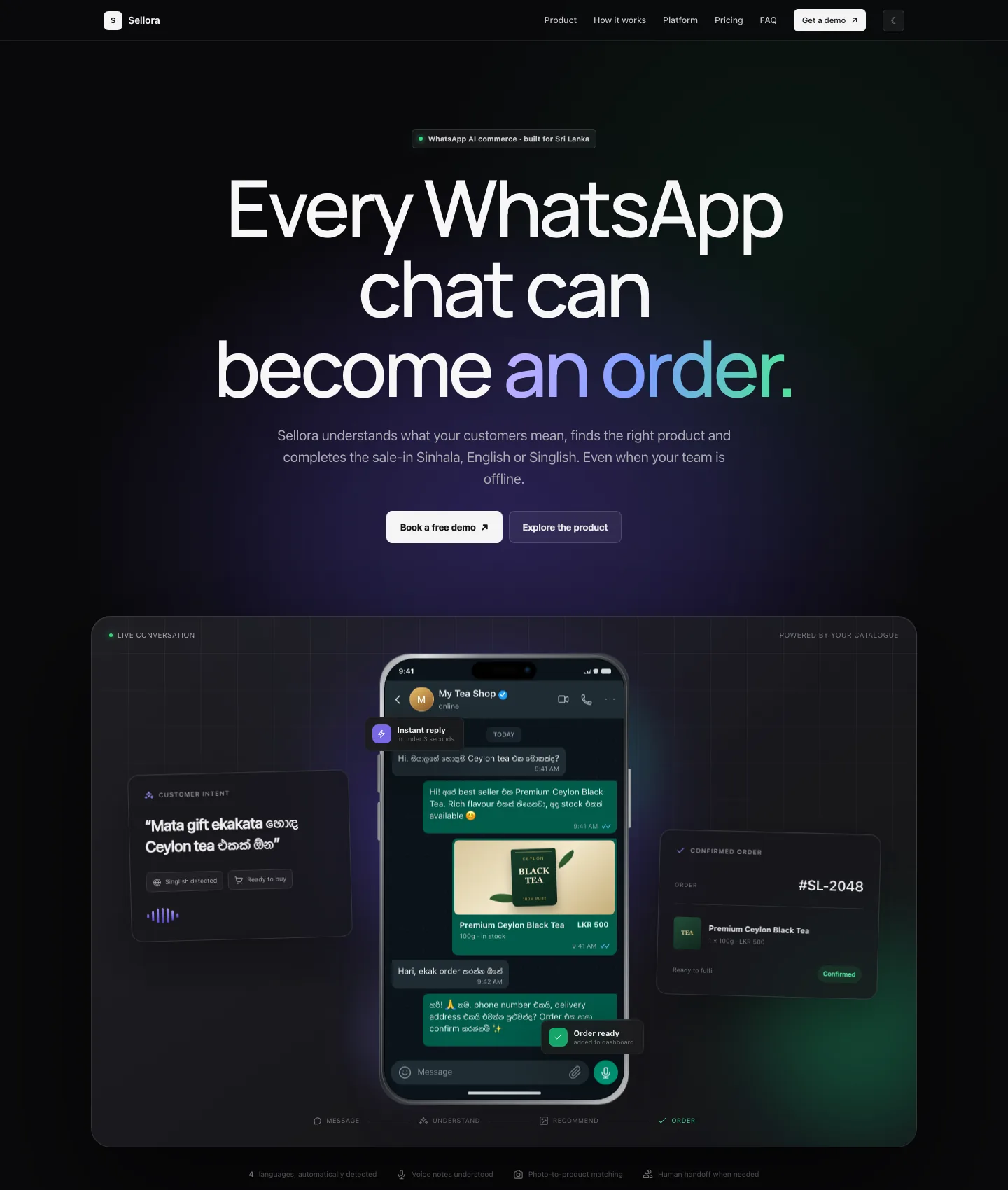
A multi-tenant SaaS that gives every store its own AI sales assistant on WhatsApp. It understands Sinhala, Tamil, English and Singlish over text, voice notes and photos, finds the right product, takes the order, and hands over to a human when it should.
- Role
- Product design, architecture, full-stack engineering, deployment
- Timeline
- July 2026 - present
- Status
- Live - onboarding merchants
- Type
- Multi-tenant SaaS
5
Deployed apps in one monorepo
4
Languages understood per message
30+
Data models scoped by tenant
45+
Automated test suites
01 · Problem
What was broken
Most small and mid-sized businesses in Sri Lanka already sell on WhatsApp. Customers message a shop after seeing a Facebook or Instagram ad, ask about a product, and expect an answer in Sinhala, Tamil, English or a mix of all three - often as a voice note or a photo of what they want.
Behind the scenes that means a person typing replies all day, orders written down by hand, stock tracked in a separate spreadsheet, and sales lost every time the team is asleep, busy, or slow. Off-the-shelf chatbots reply in stiff English, invent products and prices, and cannot take a real order.
02 · Solution
What I built
Sellora gives each store a WhatsApp sales assistant that behaves like their best salesperson. It is grounded in that store's own catalogue and FAQs, so it can only state facts that exist there, and it answers with an honest "I'll check with the team" and an optional human handoff for anything else.
The assistant drafts and confirms orders inside the chat, deducts stock when an order ships, records payment method and courier tracking, and attributes each order back to the ad that started the conversation. Staff can step into any chat from the tenant dashboard, which pauses the bot until they hand it back.
For the platform owner there is a super-admin panel to create tenants, bind WhatsApp numbers, set per-tenant AI keys, manage plans and billing, and read an immutable audit trail of every change across the system.
03 · Architecture
How it fits together
Sellora is a monorepo of five deployable apps that all talk to one backend API. Every record is scoped by tenant, and a single WhatsApp webhook routes each incoming message to the right store.
Backend API
Node 20 · TypeScript · Express · MongoDB (Mongoose)
Everything talks to this: auth, tenants, catalogue, orders, conversations, webhook, billing, audit
Tenant platform
Next.js
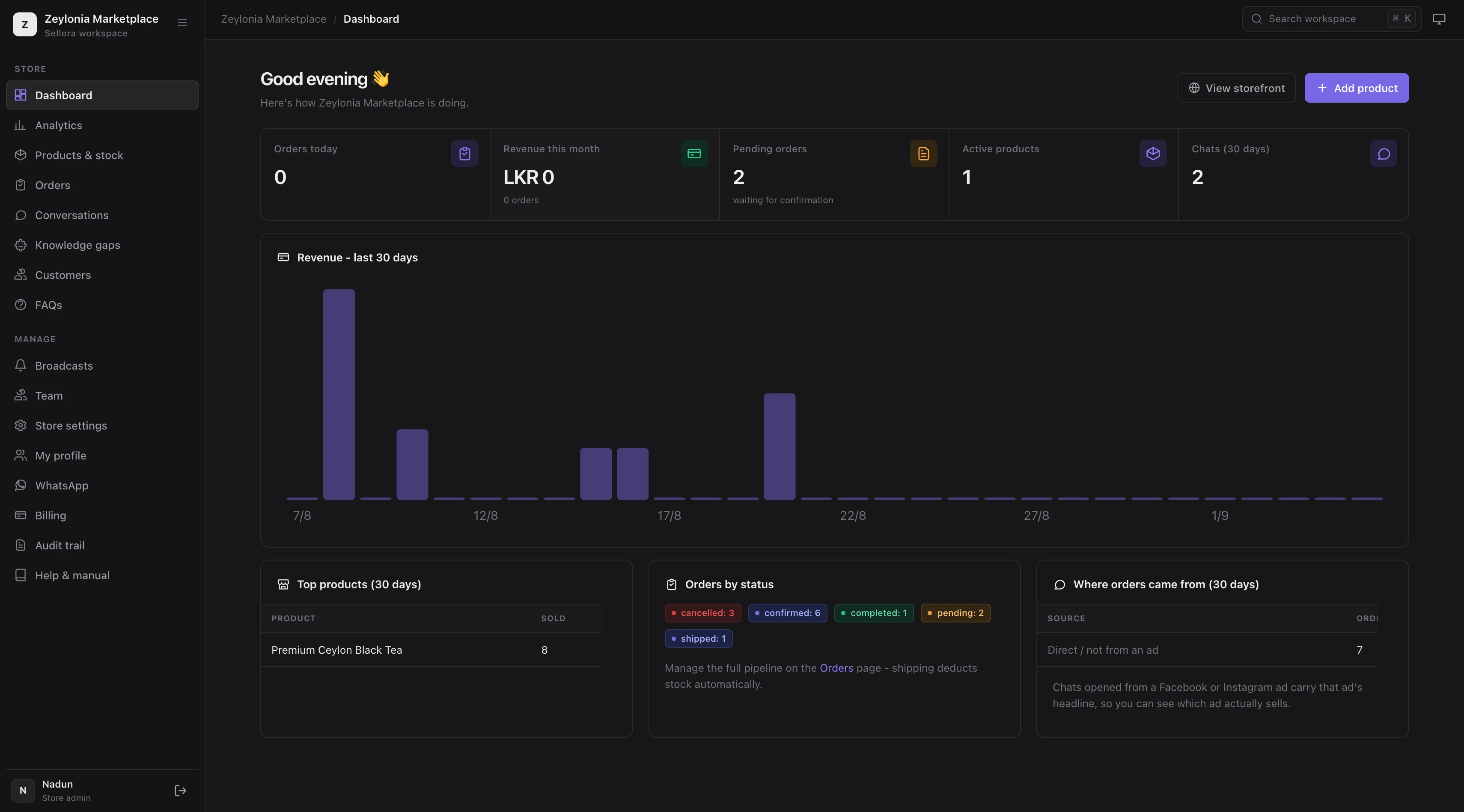
Products, stock, orders, customers, conversations inbox, FAQs, broadcasts, analytics, team, billing
Super-admin panel
Next.js
Tenants, AI keys, WhatsApp binding, plans, billing, platform settings, audit logs
Storefront
Next.js · Cloudflare Turnstile
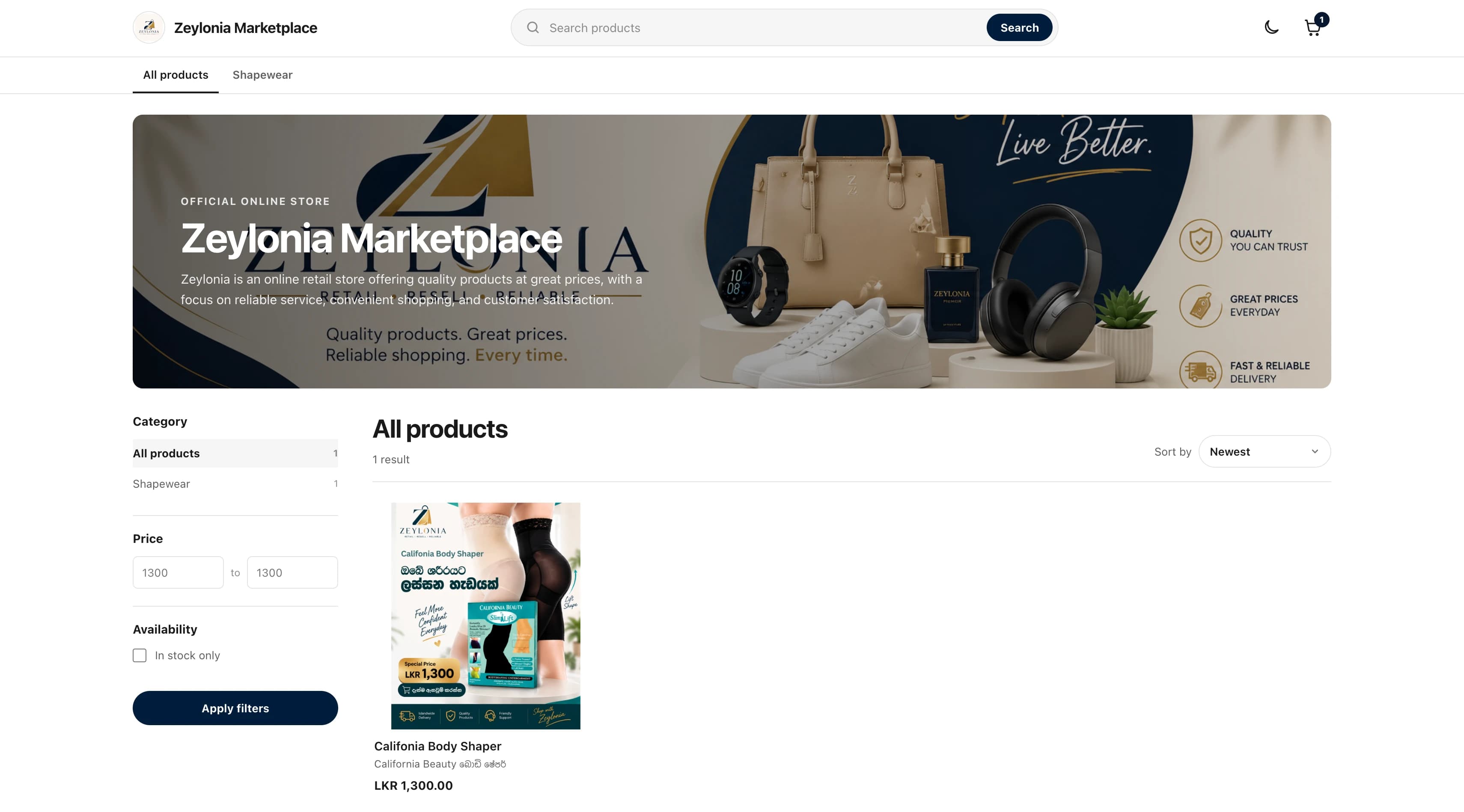
Public merchant catalogues, carts, direct checkout and WhatsApp product handoff
Marketing site
Next.js (static)
Product story, pricing, FAQ, demo request - in English and Sinhala
Request flow
Meta posts a message to the single /webhook/whatsapp endpoint. The HMAC signature is verified with the app secret, then the payload's phone_number_id selects the tenant.
Voice notes are transcribed with the tenant's own AI key using Sinhala and English language hints, with fallbacks across OpenAI and Gemini models. Photos go to a vision model for product matching. Text passes straight through.
The language of the message is detected - Sinhala script, Tamil script, romanised Singlish or English - and the reply mirrors it, honouring the tenant's language toggles. Unclear messages fall back to Sinhala.
The sales agent runs tool-calling rounds against the tenant's catalogue, FAQs and order tools. Orders are drafted server-side and created only after one explicit customer confirmation; fake confirmations are detected and blocked.
When staff mark an order as shipped, stock is deducted atomically per product and restored if the order is later cancelled or returned. Status updates go back to the customer in their own language.
Every mutation is written to an immutable audit trail, usage is metered per tenant per month, and a rejected token, exhausted model or signature mismatch emails the platform owner instead of silently taking a store offline.
04 · Technologies
Stack
Frontend
Backend
AI & messaging
Security
Infrastructure
05 · Screenshots
In the product
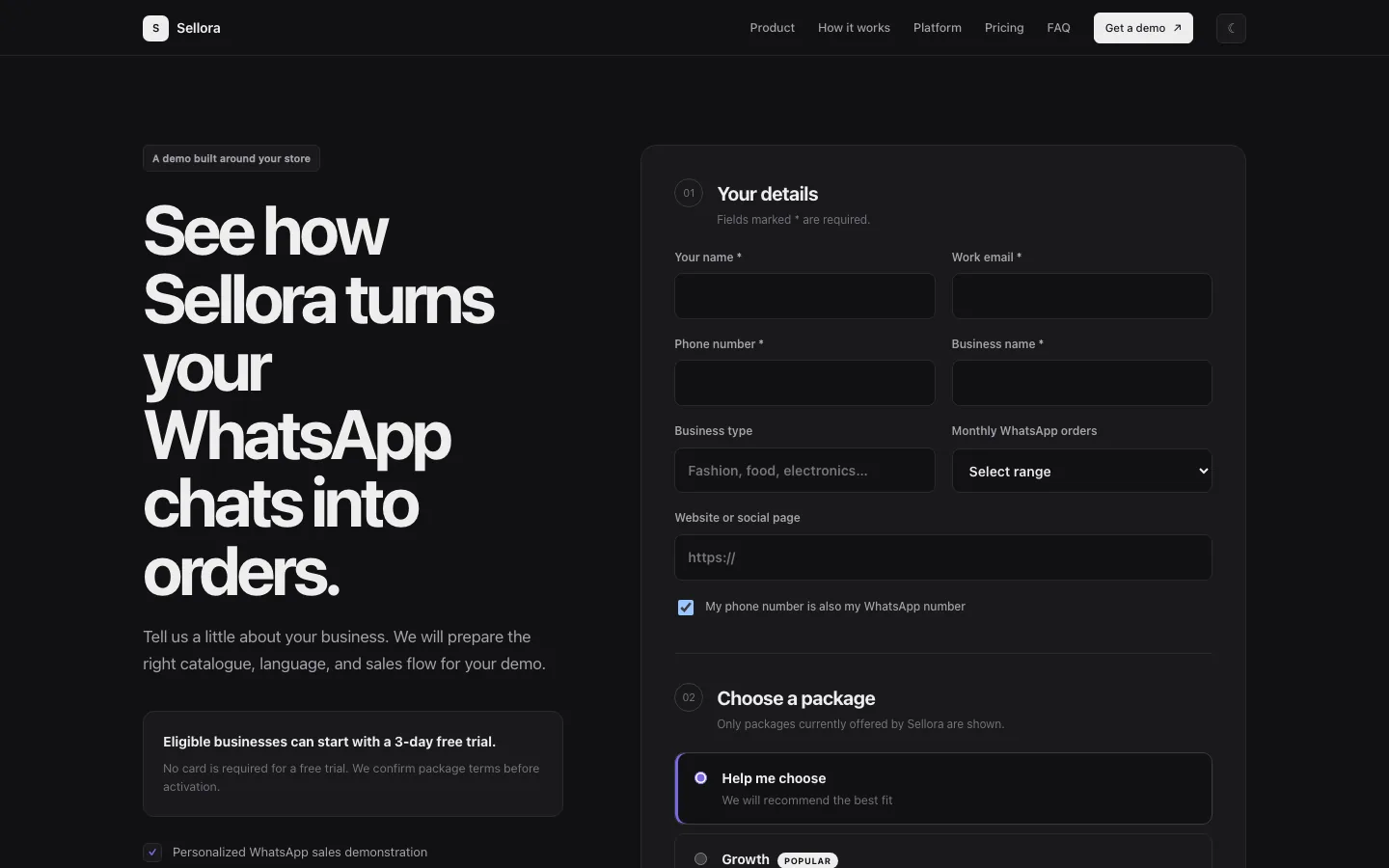
06 · Key features
What it does
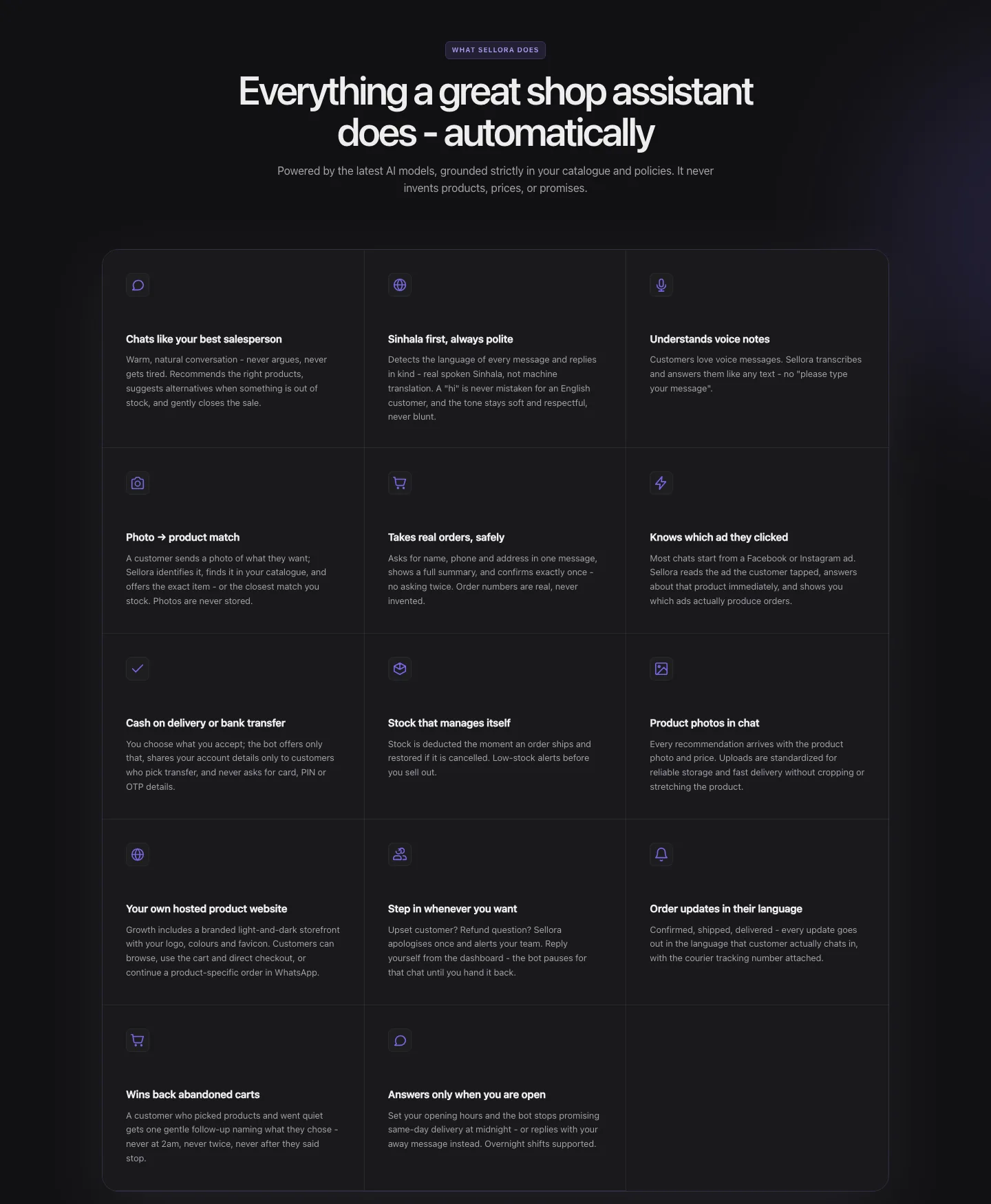
Sinhala first, four languages
Detects Sinhala, Tamil, English and Singlish per message and replies in kind. A greeting or one-word message is never mistaken for English.
Voice notes and photos
Transcribes voice notes with provider-specific fallbacks and matches customer photos to catalogue products with a vision model.
Grounded answers only
The bot may only state product facts that exist in the catalogue or FAQs. Anything else becomes an honest handoff, never an invented price.
Orders taken in chat
Name, phone and address collected once, confirmed once, and created server-side. Stock moves when the order ships.
Ad attribution
Chats opened from a Facebook or Instagram ad carry the ad headline, so the first reply is about that product and the order is credited to the ad.
Human in the loop
Staff reply from the inbox to pause the bot for that chat. The 24-hour WhatsApp window is tracked and approved templates reach customers outside it.
Multi-tenant by design
Every query is scoped by tenant in middleware. Per-tenant AI keys and WhatsApp tokens are encrypted at rest and never returned by any API.
Plans, usage and billing
Messages, AI tokens and orders are metered monthly. Plans cap products, team members and messages; suspended tenants drop to billing-only access.
Hosted storefront
Each merchant gets a branded catalogue with cart and direct checkout. Prices and availability are always re-resolved server-side.
07 · Challenges
Hard parts and how I solved them
Challenge
Language detection for short, code-switched messages. "Hi" or a single Sinhala word written in Latin letters must not flip the conversation into English.
Solution
Built deterministic routing rules that treat Sinhala as the default, classify romanised Singlish separately, and keep the customer's script style in replies. The rules are covered by dedicated language and transliteration test suites.
Challenge
Stopping the model from inventing products, prices or delivery promises, which is the fastest way to lose a merchant's trust.
Solution
The agent is restricted to tool results from the tenant's catalogue and FAQs, with a system prompt that is versioned and evaluated against deterministic cases. Knowledge gaps are recorded so merchants can fill them.
Challenge
Taking real orders safely. Customers confirm in many ways, and a model can be tricked into a "confirmation" that never happened.
Solution
Orders are drafted server-side with a fresh pending state, require one explicit customer confirmation, and are idempotent. Cancellations need their own separate confirmation. Fake confirmations are detected and blocked.
Challenge
Voice transcription across providers. Some models support Sinhala, some do not, and OpenRouter tenants cannot transcribe at all.
Solution
Transcription is configured per tenant with language hints sent only when every enabled language is supported, and a fallback chain from dedicated transcription models to native audio understanding on the chat model.
Challenge
Stock that stays correct when orders ship, cancel and return concurrently across chat and the dashboard.
Solution
Inventory moves through an append-only ledger with atomic per-product operations, plus reconciliation scripts to backfill and verify balances.
Challenge
Shipping five apps safely without leaking secrets from fork pull requests.
Solution
Vercel auto-deploys are disabled. Path-filtered GitHub Actions run CI first, deploy previews for pull requests, deploy production on merge, and skip deployment for forks.
08 · Live demo
See Sellora for yourself
A multi-tenant SaaS that gives every store its own AI sales assistant on WhatsApp. It understands Sinhala, Tamil, English and Singlish over text, voice notes and photos, finds the right product, takes the order, and hands over to a human when it should.